

Interesterified fats are seeing rapid adoption as functional alternatives to partially hydrogenated and saturated fats. This webinar brings together leading experts to examine how interesterification changes fat structure and performance in foods—and what emerging human studies suggest about metabolic and cardiometabolic outcomes. We’ll also situate interesterified oils within the broader conversation about ultra-processed foods and formulation choices.
This free webinar is presented in partnership with IAFNS.
Talks & Speakers
Trends and Use of Interesterified Oils in Food
Alejandro Marangoni, PhD, University of Guelph
A Tier I Canada Research Chair and AOCS Fellow, Dr. Marangoni will cover adoption across categories (baked goods, spreads, confections, plant-based), formulation drivers, and performance/labeling considerations.
Emerging Science on Interesterified Oils and Health
Sarah Berry, PhD, King’s College London; Chief Scientist, ZOE
Dr. Berry will discuss the latest clinical and precision-nutrition evidence on postprandial lipids, glucose/insulin responses, and longer-term cardiometabolic risk markers.
Related Resources
Webinars (On-Demand)
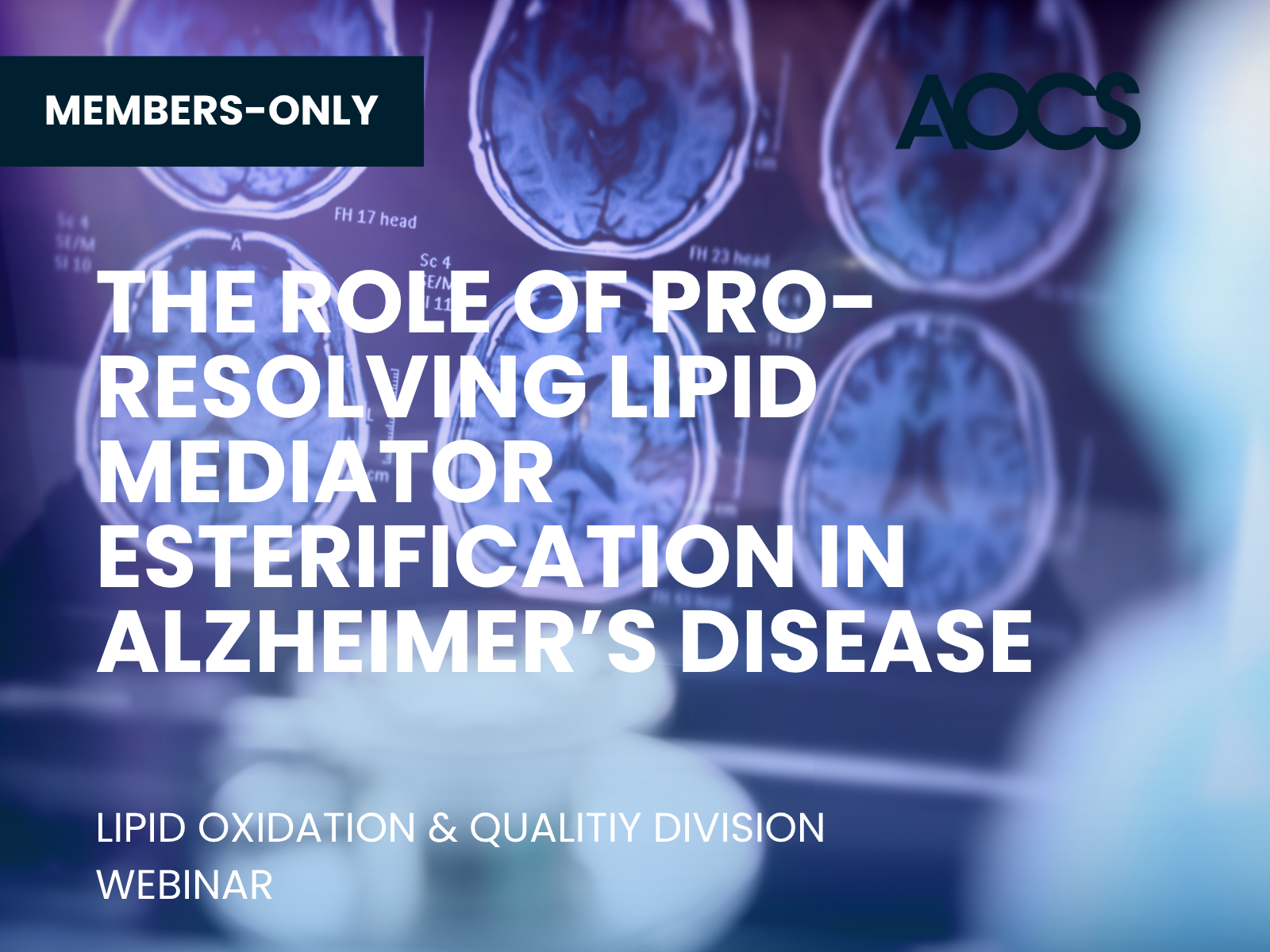
The role of pro-resolving lipid mediator esterification in Alzheimer’s disease
Discover how esterified pro-resolving lipid mediators influence Alzheimer’s disease, air pollution-related brain changes, and new prevention strategies.

Webinars (On-Demand)
In-depth Interpretation of New EU Detergents Regulation (EU) 2026/405 & Practical Compliance Roadmap
This webinar helps leaders prioritize the decisions they need to start making to prepare for EU 2026/405: what needs early attention during the transition period, what can wait, and how will the new regulation interact with frameworks like REACH, CLP, and the Green Claims Directive.
Webinars (On-Demand)
From Waste to Wonders: Designing the Next Generation of Biosurfactants
Explore the future of biosurfactants in this webinar on glycolipid innovation, sustainable formulations, and next-generation performance-driven applications.